
Inspect the Miller County Current-Owner Record
Every current-owner check starts with the Miller County Board of Tax Assessors parcel card. Treat the card as a dated snapshot from the most recent published digest rather than proof that nothing changed yesterday. Write down the record year, any update or stale-data notice, and the key fields at the same time so the finding stays verifiable later.
| Displayed owner | The person or entity tied to the published assessment account |
|---|---|
| Parcel ID | The cross-record key for the account and mapped tract |
| Situs | The location assigned to the property itself |
| Mailing address | The address used for notices, which may be elsewhere |
| Legal description | Land lot, district, subdivision, lot, block, acreage, or deed clues |
| Deed reference | A book/page, sale date, or transfer clue that can lead to the instrument |
Keep two concepts apart. The owner on a tax record is not automatically the occupant. A mailing address proves nothing about residency, and the person paying a tax bill need not hold title to the tract.
Date Every Miller County Owner-of-Record Finding
qPublic describes its data as reflecting the most current published digest. It also allows for lag and corrections. That caveat matters after a closing, an estate transfer, a correction deed, or a parcel split.
Save the assessment year, your lookup date, and the owner spelling. Save the parcel number, the deed reference, and any stale-data notice. If the card and the newest recorded deed disagree, report both dates. Investigate rather than silently picking one.
The assessor also re-reviews property touched by transfers, permits, damage, demolition, appeals, and similar changes. Its county page and an older qPublic alert list different annual inspection windows. Call (229) 758-4100 before relying on either window. An inspection notice never proves ownership.
Confirm Who Owns a Miller County Parcel Now
The check itself stays narrow: set the assessor's displayed owner beside the newest instrument conveying the same legal tract. It is not a tour of every search option Miller County offers.
- Open the qPublic parcel record and record its owner display, parcel ID, legal description, and source date.
- Search Miller County in the GSCCCA real-estate index for the displayed owner and likely transfer period.
- Inspect the newest conveyance image for its grantee, deed type, effective and recording dates, legal description, and prior reference.
- Check for later quitclaims, corrections, estate transfers, or deeds involving a parent or child parcel.
- If the evidence still conflicts, contact the Clerk and assessor with the exact IDs and dates.
- Owner of record
- The party shown in a particular official record as of that record's date.
- Vesting
- The deed language that states how the grantee holds the interest.
- Registered agent
- A public contact for a business entity, not necessarily the beneficial owner.
- Tenancy
- The form in which multiple parties hold a recorded property interest.
Read Miller County's Latest Ownership Instrument
The Clerk of Superior Court keeps the deed records. The office accepts warranty and quitclaim deeds, security deeds, assignments, plats, easements, rights-of-way, fi fas, and other instruments. Not all of them transfer title. A refinance document or a release can postdate the conveyance. That does not create a new current owner.
The statewide index lives in the GSCCCA search interface. Its guide says every Georgia county is covered from at least January 1, 1999. Older data is still being added. Search by party and date range, then open the deed image and any later filings. Some features require login or payment. An image may be unavailable. The indexing may also look ambiguous. In that case, visit Courthouse Room 103 at 155 S. First Street, Colquitt, call (229) 758-4102, email gail.johnson@gsccca.org, or request the existing record by mail.
Resolve a Recent Miller Sale or Parcel Split
Timing causes most disputes. A deed can reach the Clerk before qPublic posts a revised digest. A tax bill can stay addressed to the old account holder for its tax year. Parcel splits add a second wrinkle. The deed may describe the parent tract while the assessor later opens child accounts. Compare acreage, the legal description, any "less and except" language, the map shape, the sale date, and every parent or retired parcel number.
Ask the assessor for existing parcel-history or correction records rather than asking staff to build a new analysis. Georgia's open-records process covers existing records subject to exemptions. Miller County's request form lists a three-day response point for the Open Records Officer. It routes constitutional-office requests to the office that holds them.
Verify Miller Entity, Trust, and Estate Ownership
An LLC or corporation on a Miller County deed needs one extra step. Copy the deed name exactly. Then search the Georgia Corporations Division by business name or control number. Entity results show status and formation or registration data. They also list jurisdiction, registered agent, officers, and annual registration details. They confirm which organization executed the deed. They do not reveal every beneficial owner.
Trusts and estates raise their own issues. A trust deed may name the trustees while keeping beneficiaries private. An estate trail may run through Miller Probate Court records showing a will, a representative, sale authority, or an order. The recorded deed moving the land comes after. Probate paperwork never substitutes for the conveyance itself. The conveyance belongs in the deed records when one should exist there.
Monitor New Miller County Ownership Filings
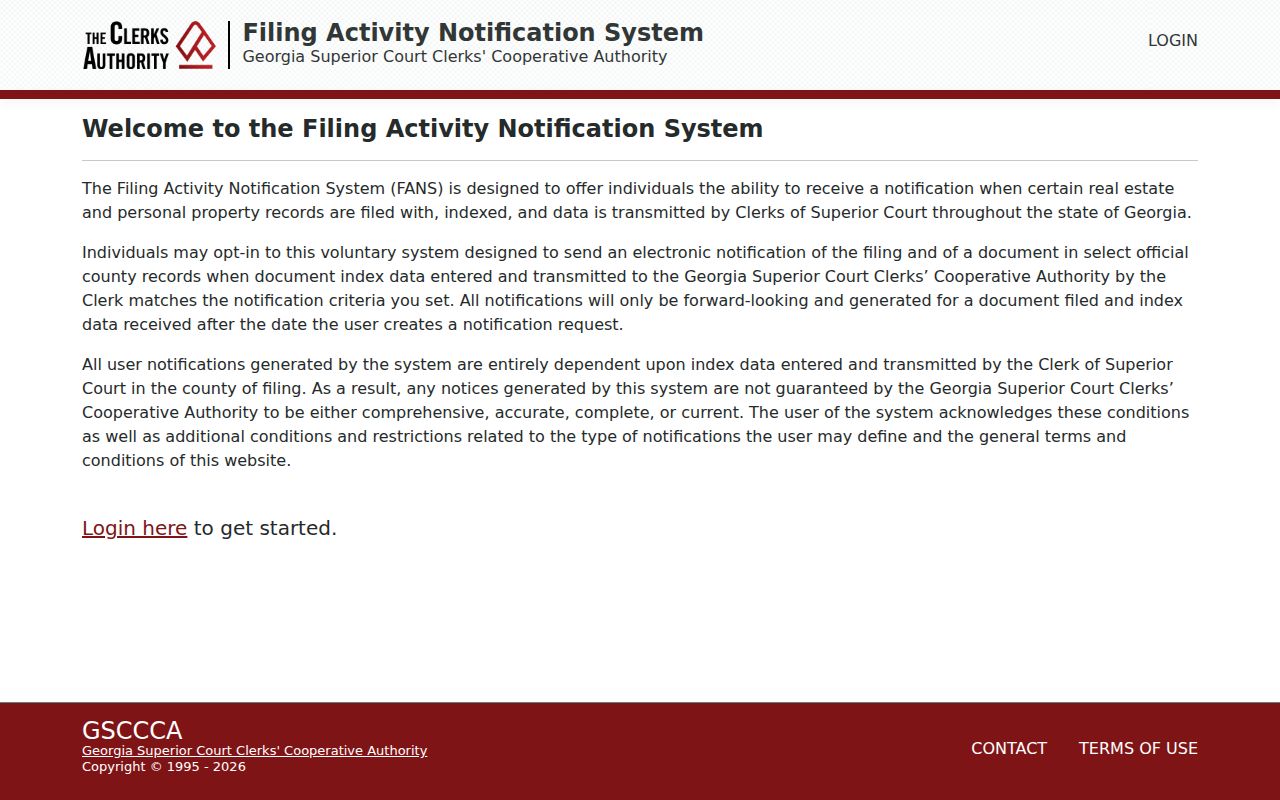
A property owner can confirm the owner of record first. Then GSCCCA offers a free way to stay alert. Its Filing Activity Notification System, called FANS, sends notices when matching filings appear. Alerts can track names, addresses, deeds, liens, UCCs, plats, and PT-61 material. The system launched statewide in 2023. By June 30, 2024, the statewide report counted more than 56,000 users. It also counted 118,000 requests, and 125,000 matches or alerts. Keep in mind those are statewide figures, not Miller-only counts.
Open the official FANS source.
An alert is a pointer, not a verdict. It flags activity for review but never proves fraud or replaces reading the filed instrument with the Clerk.
Distinguish Situs, Mail, and Protected Addresses
A situs address points to the land itself. The mailing address just tells you where notices go. A Colquitt postal label settles little. A parcel can carry ZIP 39837 and still sit outside the city, so a postal tag never proves location. Georgia Safe at Home may substitute a designated address in public records, and VoteSafe can shield a qualifying voter's residence.
Never try to reverse-engineer a missing or substitute address. Rely on the parcel ID and the legal description to confirm the owner of record. If lawful contact about the land is needed, use an appropriate public channel and limit the details you retain or publish.
Contact a Miller County Property Owner Responsibly
The owner-of-record name and the public mailing address can anchor a good-faith inquiry about a purchase, a deed issue, access, or a boundary. They do not show who lives at the situs. Neither one justifies contact at a protected location. Note the source date beside anything you keep. Publish no personal details beyond what the property task itself requires.
Lawful use only. Current-owner records may be stale, incomplete, or protected. Never use them to stalk, harass, intimidate, or defeat an address-confidentiality program.
For the broader address-to-owner method, see who owns a Miller County property. Get qualified title help if deed interests stay unclear.